Fashion Campaigns
FORM/SHIFT
From Brief to Campaign
Project Overview
FORM/SHIFT is a fictional premium contemporary womenswear campaign developed for Autumn / Winter 2027.
The project explores how AI image generation can be used within a structured fashion design and art-direction process rather than as isolated image generation.
The process moved from brief and visual research through art direction, Hero Look development, campaign consistency and controlled material experimentation.
Creative Brief
SHIFTED STRUCTURES
- Brand
- FORM/SHIFT
- Season
- Autumn / Winter 2027
- Market
- European contemporary womenswear
- Positioning
- Premium contemporary, design-led womenswear
- Collection Concept
- SHIFTED STRUCTURES
- Core Line
- “Familiar pieces. New perspectives.”
- Design Direction
- Contemporary Architectural Asymmetry
The collection explores familiar tailored garments shifted through asymmetry, layering, panel construction, directional lines, altered proportions and controlled volume.
The intention was to create a visual language that feels directional and distinctive while remaining wearable, contemporary and commercially credible.
Visual Research
Berlin Modernism × Contemporary Architectural Asymmetry
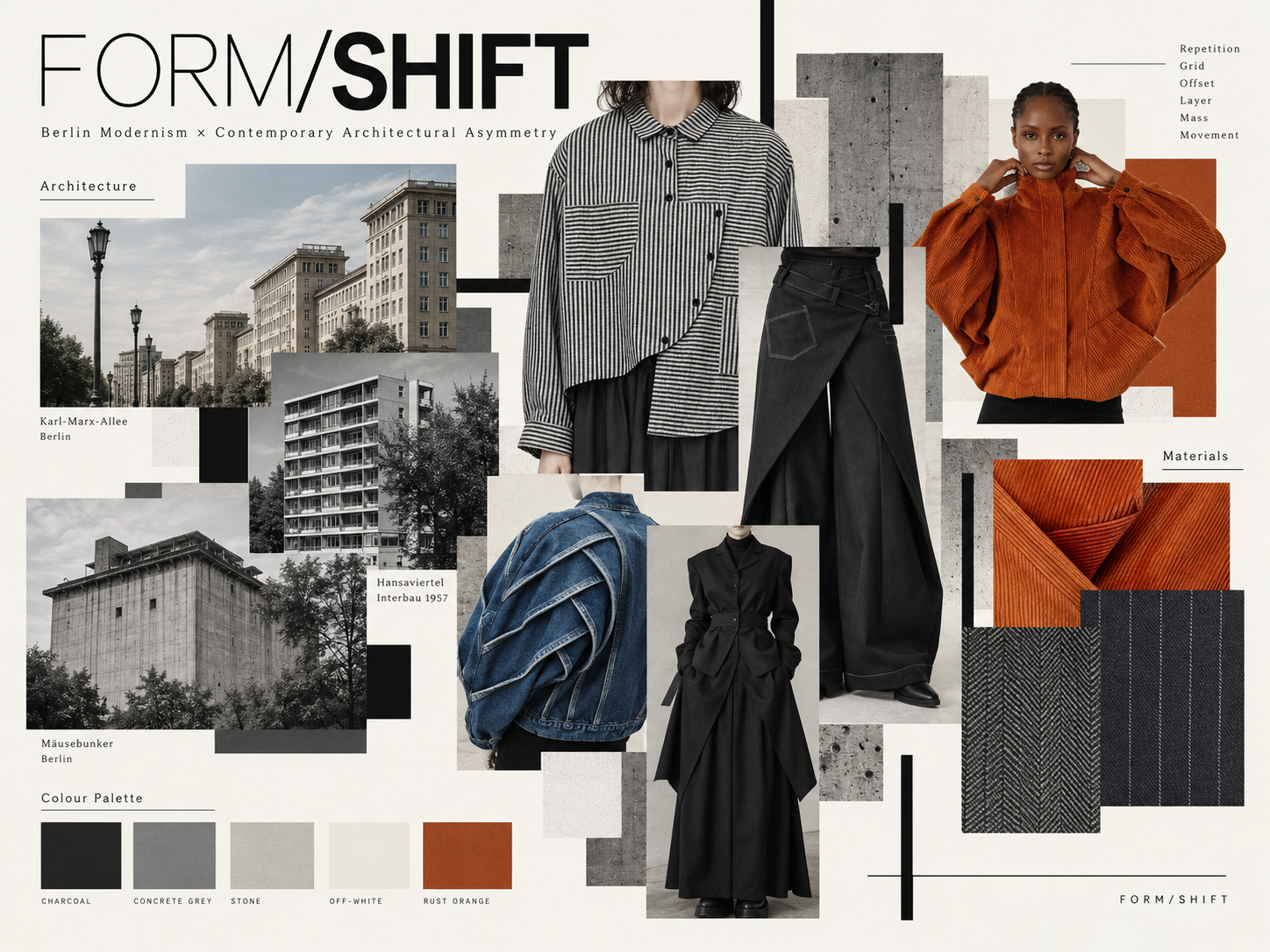
The visual research combined Berlin post-war architecture with fashion references focused on asymmetric tailoring, layered construction, directional stripes, elongated silhouettes and restrained material contrasts.
Architectural principles such as repetition, grid, offset, layer, mass, movement, concrete and negative space were translated into the campaign’s visual language.
The references were used to extract visual principles rather than to be copied literally.
Research informed
- Silhouette
- Construction
- Material
- Proportion
- Directional lines
- Colour
- Architecture
- Campaign mood
From Research to Art Direction
The research was translated into a restrained visual system built around charcoal tailoring, concrete-grey architecture and a controlled rust-orange accent.
Asymmetry appeared through shifted garment construction, directional stripe placement, elongated proportions and controlled layering.
The architectural environment reinforced the same ideas through repeated vertical columns, stairs, recessed bays, hard geometric framing and negative space.
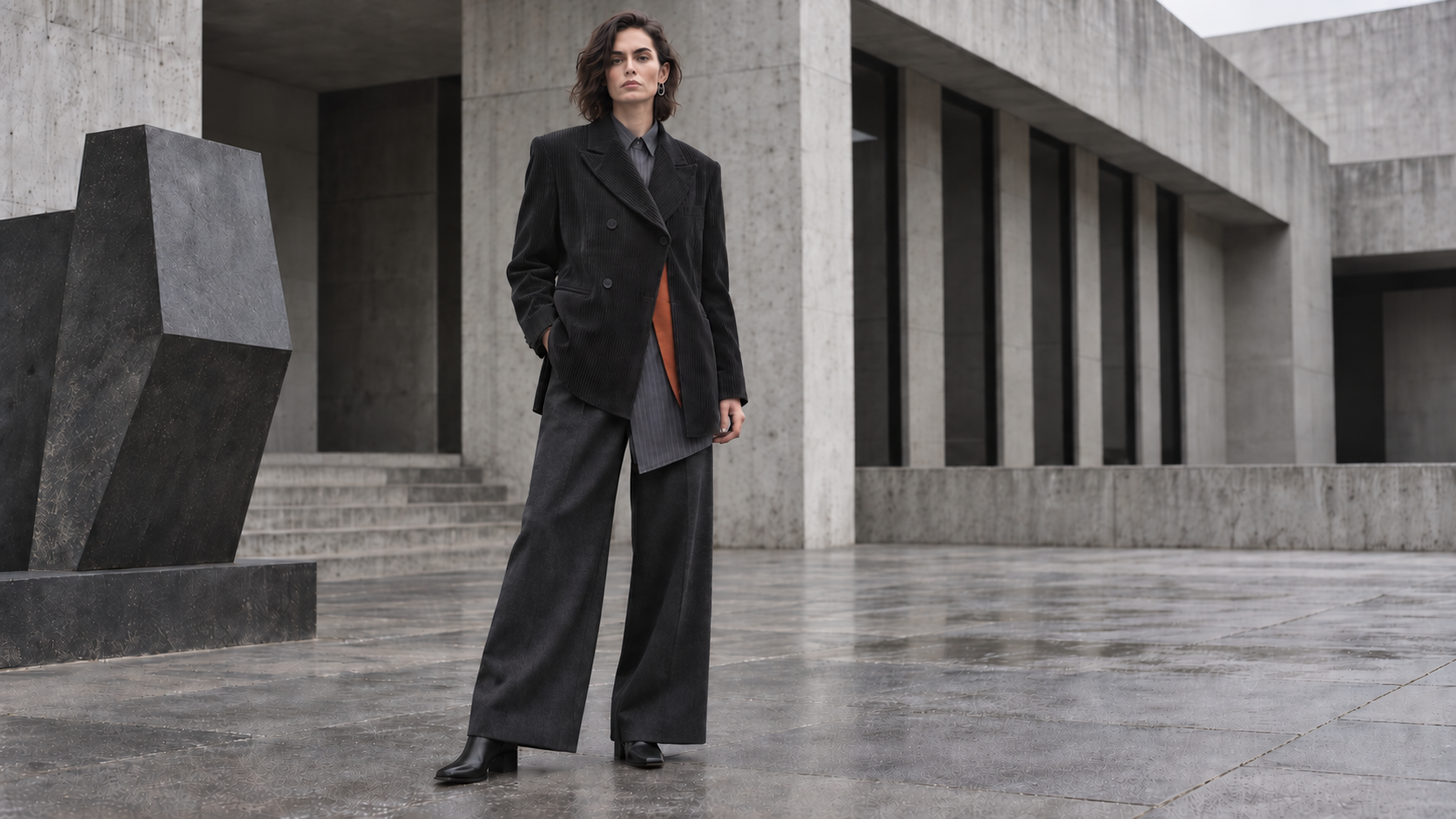
Hero Look
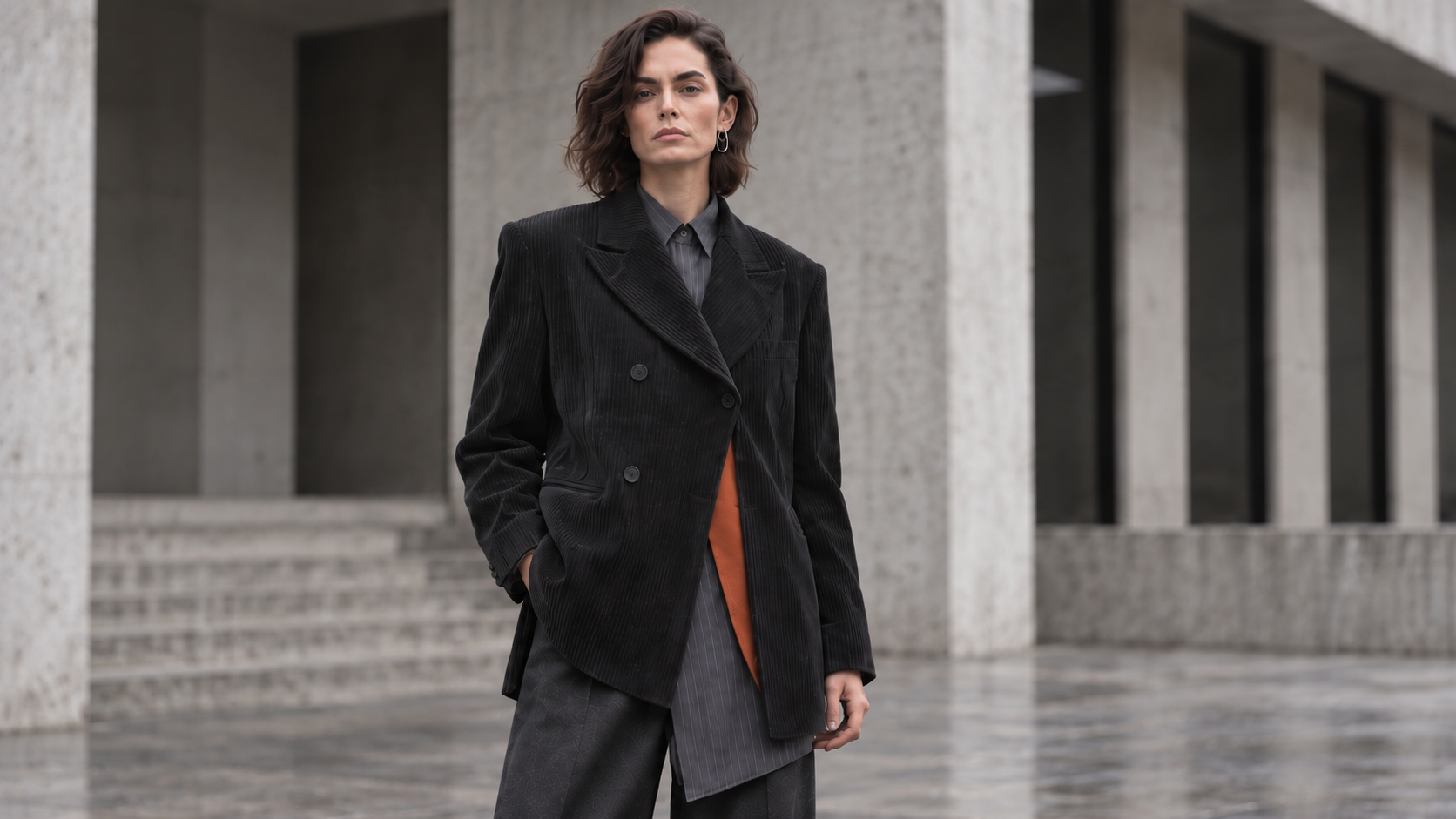
- Jacket
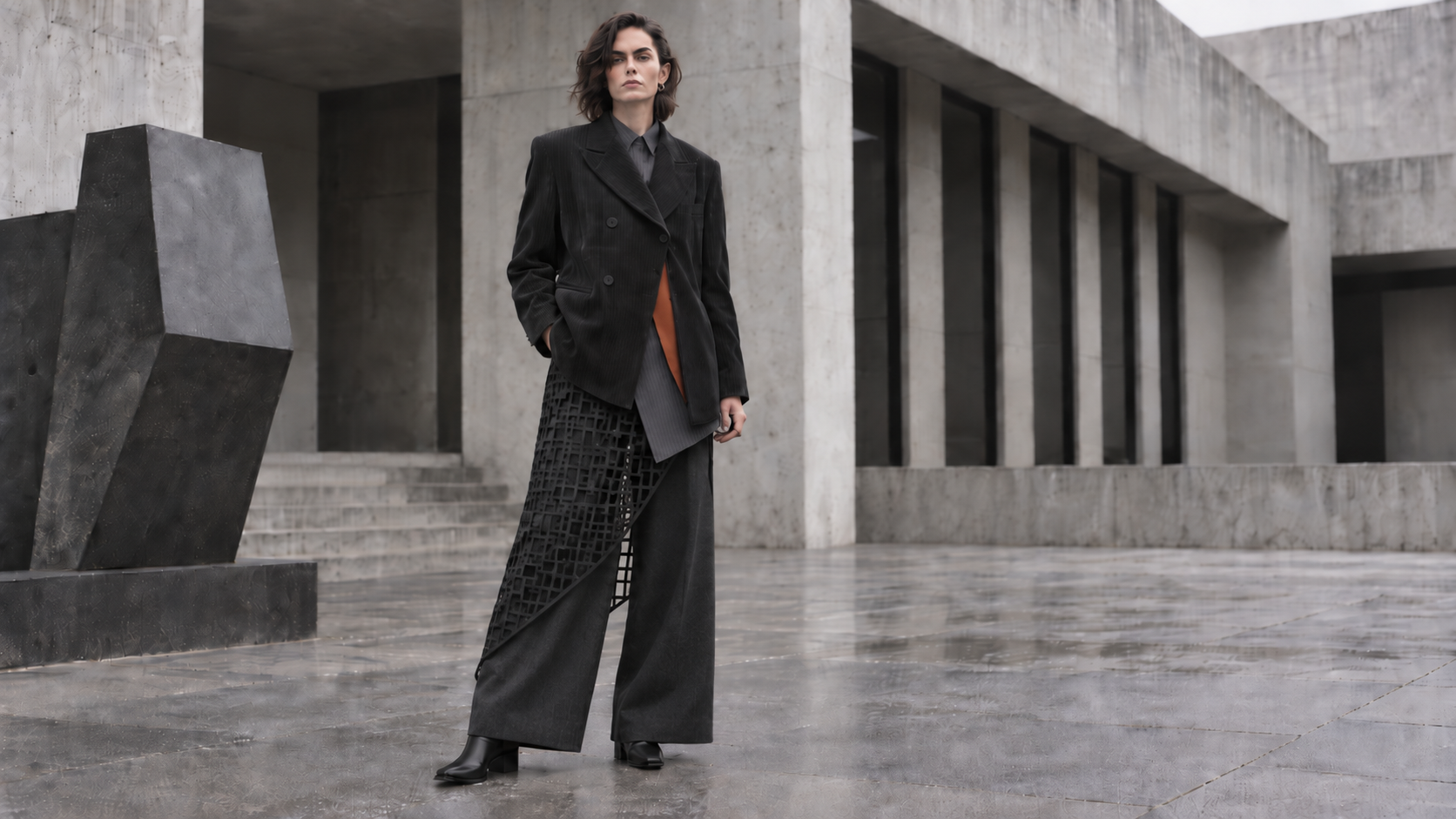
- Charcoal / near-black corduroy tailoring with an elongated asymmetric cut, controlled oversized proportion, strong restrained shoulders, shifted front overlap and off-centre closure.
- Shirt
- Lightweight grey / charcoal fine pinstripe shirting with an elongated lower extension, soft drape and controlled stripe direction.
- Gilet
- Slim burnt-orange / rust sleeveless tailored layer worn beneath the jacket and over the shirt. Clean, open-front and visually secondary.
- Trousers
- Full-length, very wide-leg charcoal tailored trousers with a restrained tonal surface texture.
- Styling
- Black pointed ankle boots and one small sculptural silver / dark-silver oval-loop earring. No bag, necklace or additional jewellery.
Master Reference System
One Hero Image. One Visual Source of Truth.
Once the Hero image was approved, it became the Master Reference Image for the campaign.
It became the strict visual source of truth for:
Model
- Identity
- Hair
- Expression
- Makeup
- Overall presence
Garment
- Construction
- Proportion
- Materials
- Layering
- Styling
Campaign
- Architecture
- Lighting
- Colour balance
- Accessories
- Overall visual language
Later images were developed as controlled campaign variations rather than independent interpretations.
This became the foundation of the project’s consistency workflow.
Campaign System
A Controlled Six-Shot System
The campaign was structured as a controlled six-shot system.
Each image had a defined role. The purpose was not to repeat the same composition, but to test whether the established Hero Look and campaign language could remain coherent across changing viewpoints, framing and movement.
01 — Hero Full-Body
Hero / Master Reference
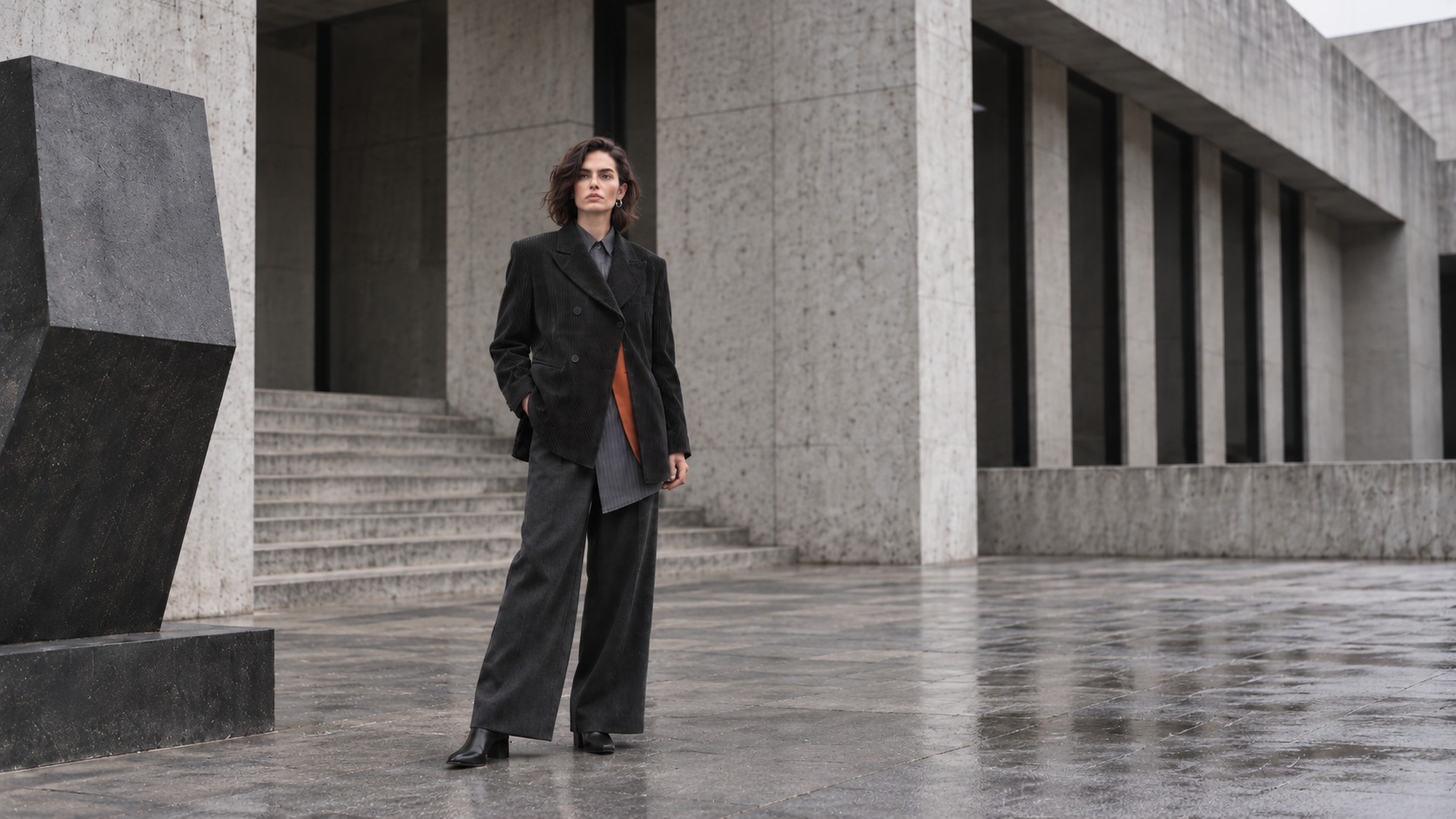
02 — Architectural Full-Body Variation
A wider architectural composition using increased negative space while preserving the established campaign system.
03 — Three-Quarter / Medium Fashion
A closer fashion view maintaining the same model, garment design, material relationships and location language.
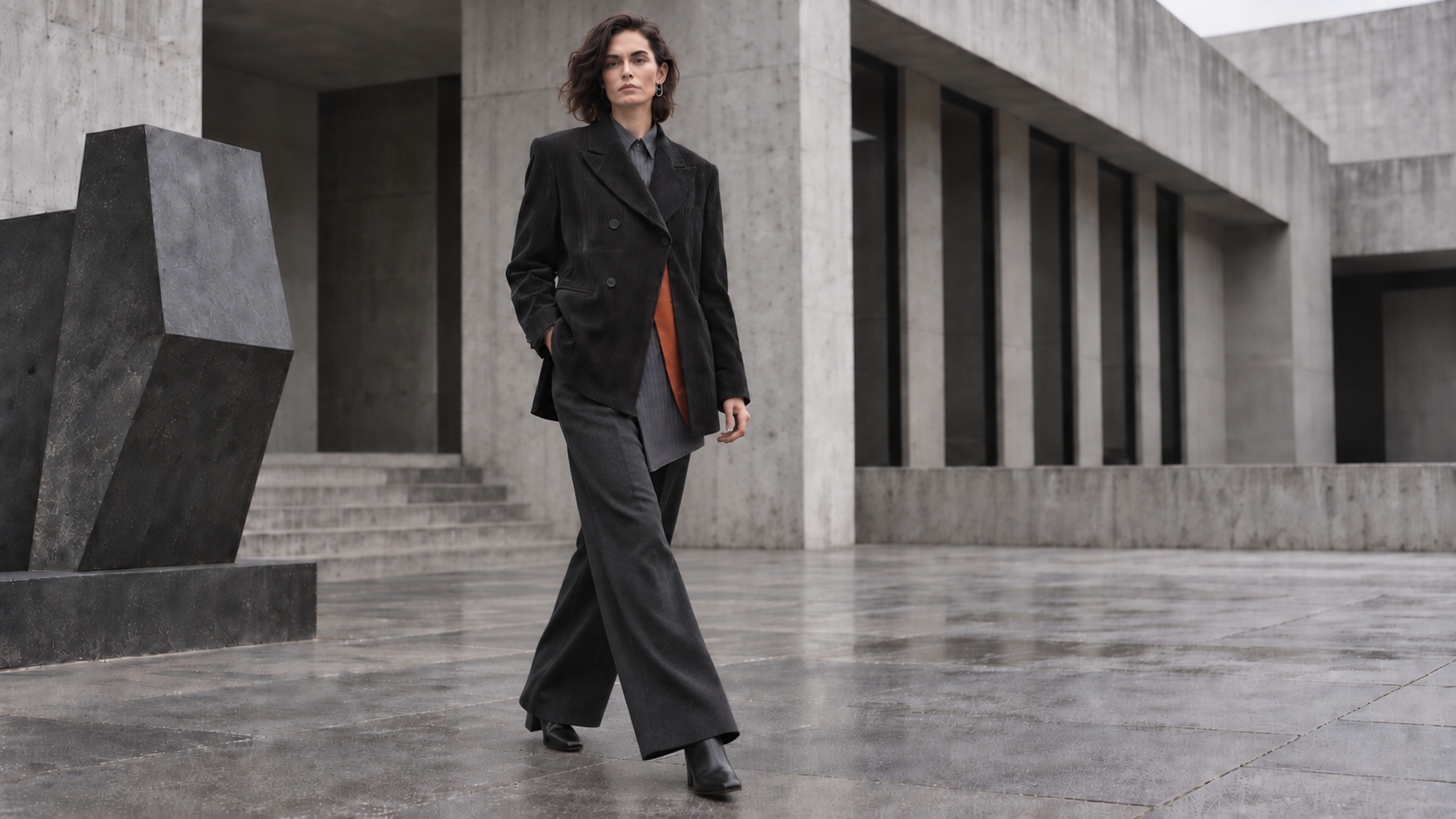
04 — Controlled Movement
Movement was introduced as a controlled variable while the visual identity of the campaign remained fixed.
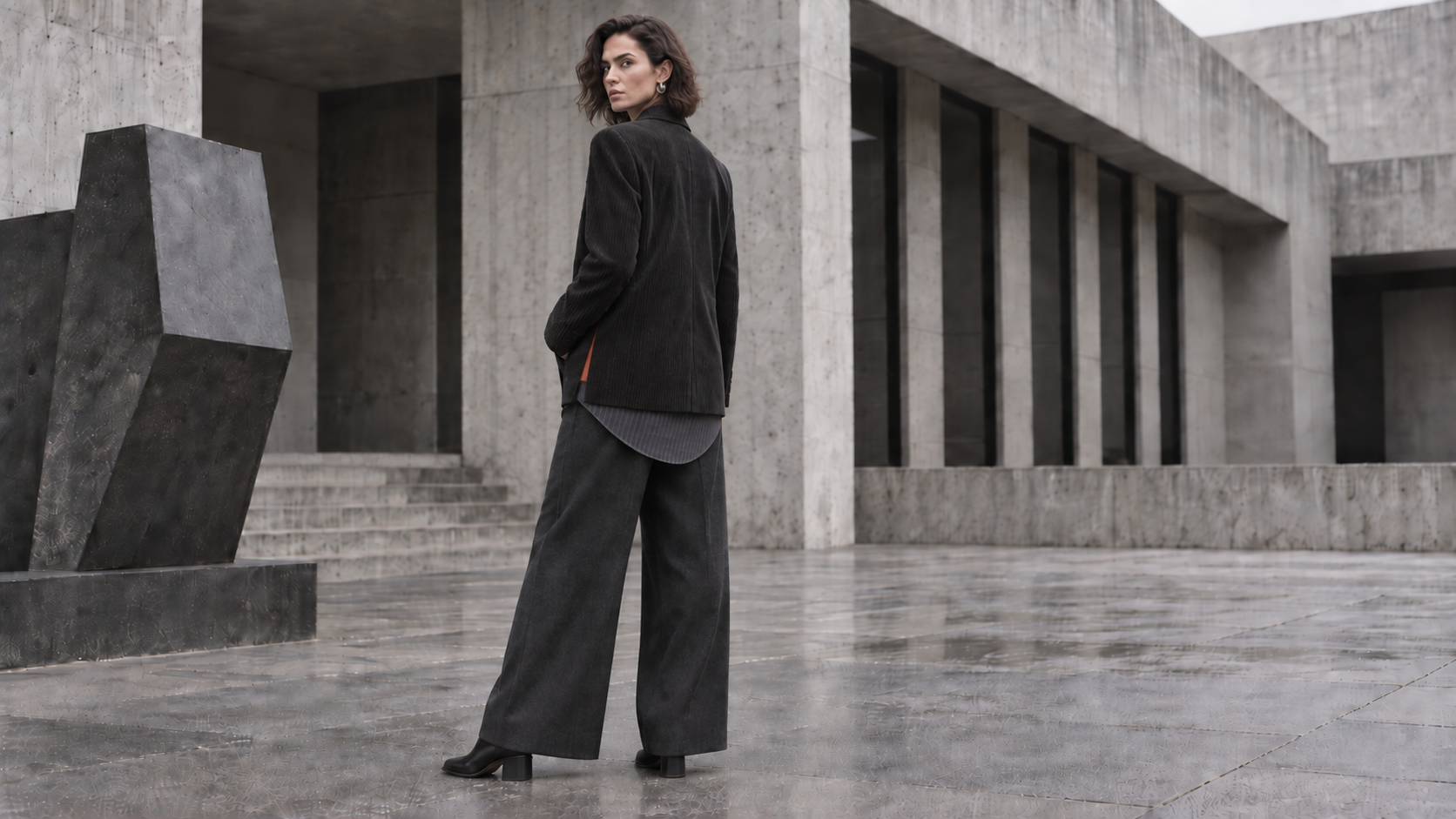
05 — Back / Rear Three-Quarter
A rear view used to test garment continuity and campaign consistency beyond the front-facing Hero image.
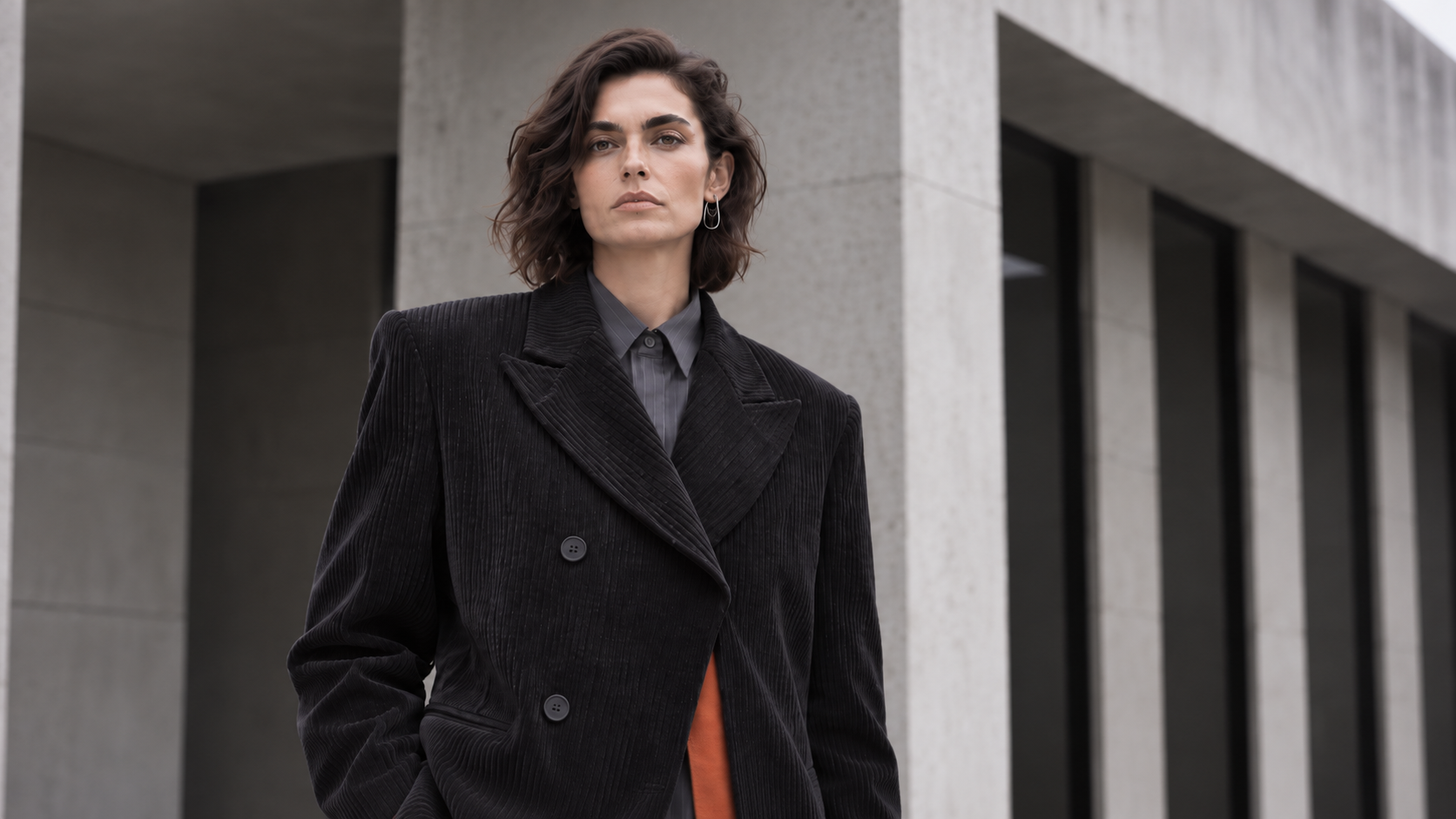
06 — Construction / Material Detail
A closer view emphasizing jacket construction, corduroy texture, shirt, rust accent, face and accessory continuity.
Controlled Consistency
Separating fixed elements from controlled variables made it easier to identify when an image had drifted away from the campaign system.
Consistency was treated as a design framework rather than as simple prompt repetition.
Locked
- Model identity
- Hero Look
- Garment construction
- Materials
- Styling
- Location language
- Lighting
- Overall campaign colour
Controlled variables
- Camera distance
- Framing
- Model placement
- Subtle pose
- Movement
- Negative space
- Architectural framing
- Garment emphasis
Controlled Material Variation
One Variable, Introduced Deliberately
After the core campaign system was established, one additional material and construction variable was introduced while the existing campaign remained locked.
The trousers were retained and a single continuous black geometric openwork wrap layer was added.
The material was defined as true openwork textile construction with actual holes, allowing the trousers to remain visible through the surface.
Material language
- Solid black textile structure
- Actual open holes
- Architectural grid
- Rectangular and linear geometry
- Controlled scale variation
- No floral lace
- No random motifs
- No romantic lace language
This image was treated as a controlled design experiment rather than as a completely new collection look.
Campaign in Motion
The campaign in motion — the lace-overlay look from Shot 07, filmed in the same brutalist concrete setting.
Workflow Lessons
01
Establish the Hero first
Build one strong visual foundation before expanding the campaign.
02
Use images as references, not text alone
Once approved, the Hero image became the campaign’s visual source of truth.
03
Separate locks from variables
Consistency improves when fixed and changing elements are clearly defined.
04
Preserve shot intent
A full-body image remains full-body. A medium image remains medium. A rear view remains a rear view. A detail remains a detail.
05
Edit locally
Correct local problems with targeted edits instead of regenerating an otherwise successful image.
06
Stop when the image works
If an image is professionally usable and approximately 95% successful, further editing can create more problems than it solves.
07
Describe garment construction spatially
Garment behaviour needs to be explained physically and structurally, especially for layered or wrap constructions.
08
Material terminology matters
For the geometric openwork variation, “true openwork with actual holes” was more accurate than describing the material only as transparent.
09
Consistency is a system
A coherent campaign comes from structured visual control, not from repeating one increasingly long prompt.
Reflection
FORM/SHIFT shifted the focus from generating individual fashion images to designing a repeatable visual system.
The strongest results came from treating AI as part of an art-direction workflow: establishing a strong reference, defining what must remain fixed, controlling what is allowed to change and intervening selectively when an image drifted.
The project became less about generating more images and more about maintaining creative direction across a complete campaign.
Visual Research Sources
Architecture
- Karl-Marx-Allee — Berlin
Wikimedia Commons · Public Domain
- Hansaviertel / Interbau 1957 — Berlin
Wikimedia Commons · CC0
- Mäusebunker — Berlin
Wikimedia Commons · CC BY-SA 4.0
Fashion References
- Velvet Corduroy Jacket (Ginger)
DAO YANG · Designer attribution: Alena Pirogova
- Striped patchwork pocket shirt reference
iOPEN Mall / kukuta
- Asymmetrical Wrap Wide Leg Jeans
Chiclara
- Piping design denim jacket reference
Top of the Hill
- Fashion garment reference
AliExpress